Email us:
Blog
Auger, Grain Cart, and Header Welds: The Repairs We See Most This Time of Year
back to blog

October 8, 2026
Short answer: The harvest weld repairs we see most are worn or torn auger flighting, cracked auger tubes, stress cracks on grain carts at the tongue, axle mounts and corner seams, and cracked combine header frames and reel arms. Almost all of them can be welded and reinforced for less than a replacement part, and faster than waiting on a back-ordered one. Scott’s Welding Service repairs harvest equipment in steel, stainless and aluminum at its Great Bend and Emporia, KS shops, or on site with a mobile welding rig.
Trailers get most of the attention during harvest, but they aren’t the only thing that cracks under the load. Every fall the same wear points roll through our shop, and many of them aren’t trailers at all. They’re augers, grain carts and headers.
Here’s what breaks most, why it breaks, and what a repair looks like.
Why these parts fail in October
Augers, carts and headers all run hardest during the same few weeks. Kansas corn, sorghum and soybean harvest keeps them working from late September into November, which you can follow in the USDA’s weekly Kansas Crop Progress report. Full loads, rough field ground and constant vibration find every weak weld. The pattern is almost always the same: a small crack starts at a weld or a stress point, the metal flexes with every load, and the crack grows until something tears.Auger repairs
- Worn or torn flighting. Grain is abrasive. Over seasons it wears flighting thin at the edges until it tears or folds. Sections can be rebuilt or replaced.
- Cracked auger tubes. Cracks often start near mounts, hanger points and the intake. Caught early, a crack is ground out, welded and reinforced.
- Broken mounts and hangers. Brackets that hold the tube or the drive take a beating from vibration and transport.
- Hopper and intake damage. Bent or cracked hoppers and intake guards should be fixed, not removed.
Grain cart repairs
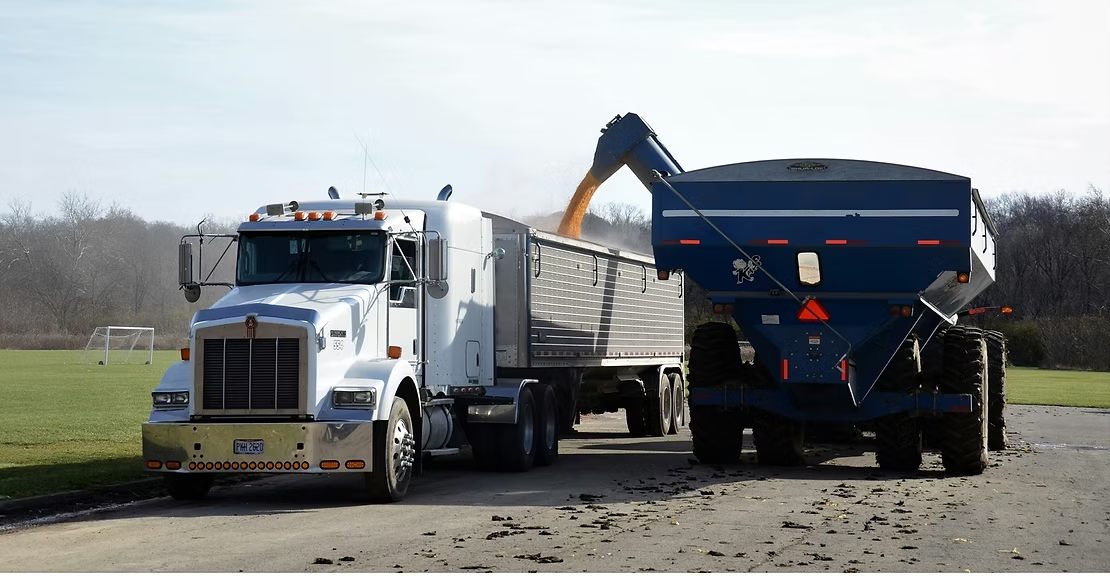
- Tongue and hitch cracks. The tongue carries the full weight of a loaded cart over rough ground. Cracks here need attention right away.
- Axle and frame mounts. Stress cracks form where the axle meets the frame, especially on carts that run full on uneven fields.
- Corner seams and hopper walls. Corners flex with every load and every unload. Small cracks spread fast once the steel starts working.
- Unload auger housings and mounts. The cart’s own unloading auger and its PTO drive take heavy, repeated loads.
Combine header repairs
- Header frame cracks from vibration and hard contact with the ground.
- Reel arms and supports that crack or bend.
- Feeder house welds that carry the header’s load into the combine.
- Brackets, mounts and skid points worn through or torn off.
Repair or replace?
For most cracks, repair wins. A weld repair usually costs less than a new part, and it gets you running without waiting on a back-ordered component in peak season. Replacement makes more sense when the metal is worn too thin to hold a weld, the damage is spread across a whole section, or the part has already been repaired several times in the same spot. We’ll tell you which it is after we look at it. If a section needs new material, we stock steel, aluminum and stainless through our supplies and distribution counter, so reinforcement plates and replacement pieces don’t have to be ordered in.Shop or field
Smaller parts can come straight to our Great Bend or Emporia shop. For a grain cart or header that’s hard to move mid-harvest, our mobile welding rig comes to the field, with 24-hour emergency service. Not sure if a crack can wait? Our harvest breakdown triage guide covers what to fix now and what to schedule for winter. Custom crews far from their home shop can also read how we handle harvest crew trailer repair. Once harvest wraps, repaired areas and bare steel are worth protecting before storage. Sandblasting and coating strips rust and old paint and seals the metal for the off-season. Working safely around this equipment matters as much as fixing it. OSHA’s agricultural operations resources cover tractor, machinery and grain handling hazards for farm crews.Get it fixed and get back to cutting
Got an auger, cart or header showing cracks? Contact us or call Great Bend at 620-792-0533 or Emporia at 620-208-9353. Send a photo of the damage and we’ll tell you whether it’s a shop job or a field call.FAQ
What are the most common harvest equipment weld repairs?
The repairs that come in most during fall harvest are worn or torn auger flighting, cracked auger tubes and hanger mounts, stress cracks at grain cart tongues, axle mounts and corner seams, and cracked combine header frames, reel arms and feeder house welds.Is it cheaper to weld a cracked grain cart or replace the part?
In most cases a weld repair costs less than a replacement part and avoids waiting on back-ordered parts in peak season. Replacement makes more sense when the metal is worn too thin or the damage is too widespread to repair safely, and a shop can tell you which after an inspection.Can a cracked auger tube be welded?
Yes, if the crack is caught early and the surrounding tube wall still has enough thickness. The crack is ground out, welded and often reinforced, and worn flighting can be repaired or replaced at the same time.Can you weld on a combine without damaging the electronics?
Yes, with the right precautions. A welder should disconnect the battery, place the ground clamp close to the weld, and follow the manufacturer’s guidance so welding current does not travel through bearings, sensors or control modules.Do you come to the farm for welding repairs?
Yes. Scott’s Welding Service runs a mobile welding rig with 24-hour emergency service for equipment that cannot be moved easily, and also repairs equipment at its shops in Great Bend and Emporia, Kansas.What metals can you weld on farm equipment?
Scott’s Welding Service repairs steel, stainless steel and aluminum parts on agricultural equipment, and also stocks steel, aluminum and stainless for replacement parts and reinforcement plates.Recent News

Driveline Down at Harvest: PTO Shaft and U-Joint Repair When Every Hour Counts
October 12, 2026

Fast Trailer Repair for Custom Harvest Crews Moving Through Central Kansas
September 21, 2026

Harvest Breakdown Triage: What to Fix Now vs. What Can Wait Till Winter
September 18, 2026

5 Signs Your Trailer Needs Repair | Scott’s Welding Service
July 24, 2026
America’s Farmers Built This Country: From Horse-Drawn Plows to Modern Equipment Repair: How Scott’s Welding Helps Keep Today’s Farmers in the Field
July 7, 2026
June Storm Season in Kansas: Fast Trailer Repair & Welding Services That Keep Farmers Moving
June 4, 2026